
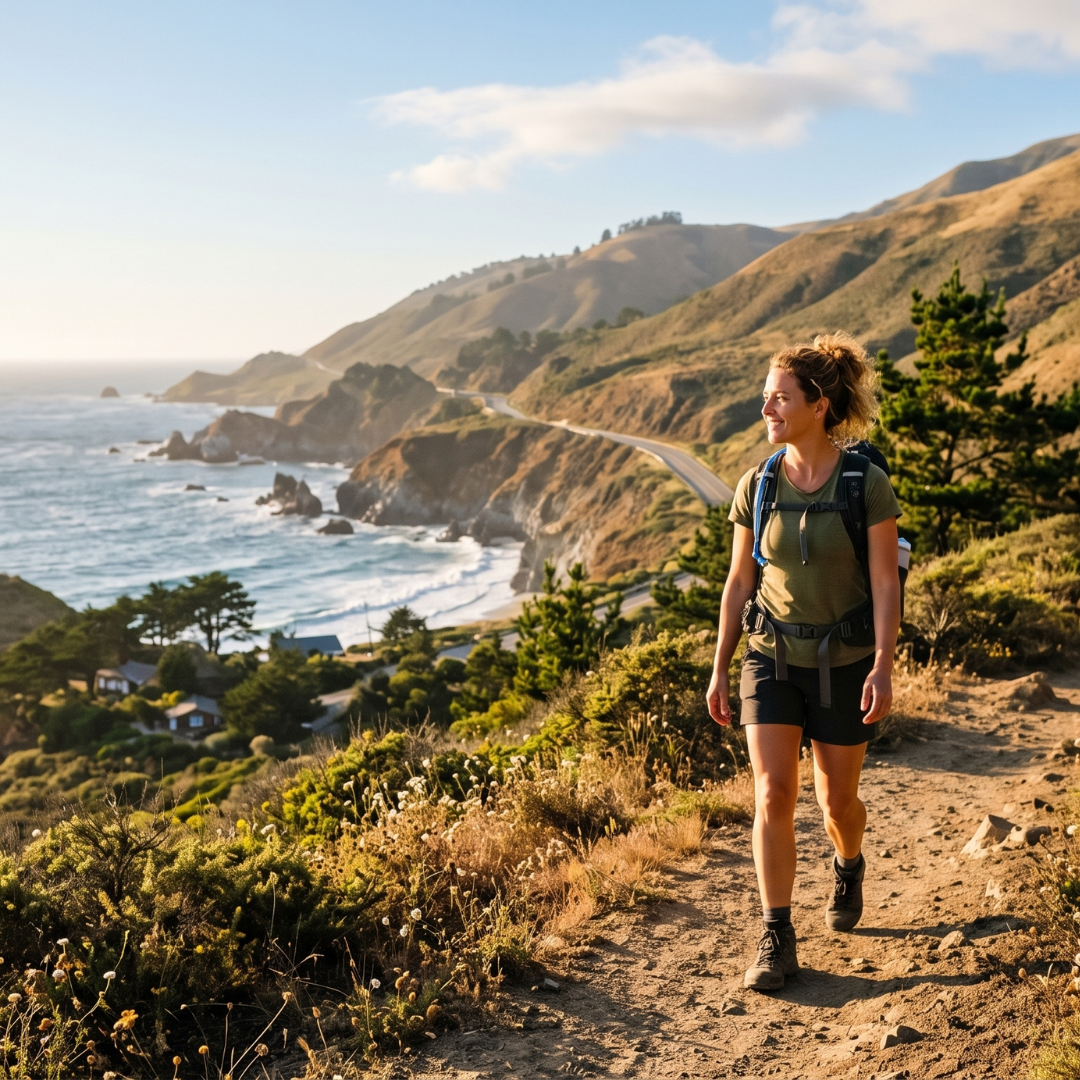
Whether you are navigating the steep, root-tangled switchbacks of Garland Ranch or stepping across the wind-swept, granite crags of Point Lobos, the Monterey Peninsula offers some of the most spectacular—and challenging—terrain in the world.
As hikers and trail runners, we tend to focus heavily on our cardio endurance and leg strength. But there is a hidden, underlying system that dictates whether you glide seamlessly over a rocky path or end your day with a painful ankle sprain.
That system is proprioception.
At Healing Home Wellness, we work with outdoor athletes to look past simple muscle soreness. If you want to conquer the coast and valley trails safely, you need to understand how regular structural massage acts as a tune-up for your body’s internal GPS.
Your Body's Sixth Sense: The Brain-to-Trail Connection
Proprioception is your body’s ability to perceive its own position, movement, and spatial orientation without looking. It’s the reason you can walk in the dark without falling over, and it’s what allows your foot to instantly adjust when a loose stone shifts beneath your boot.
This system relies on millions of tiny sensory receptors called mechanoreceptors, which are embedded deeply within your muscles, tendons, joints, and surrounding fascia.
When you step onto uneven terrain, these receptors fire rapid-fire data to your brain: The ground is sloping left. The ankle is rolling outward. Increase tension in the lateral calf. Your brain processes this in milliseconds and fires back micro-adjustments to keep you upright.
The Blurred Map: How Chronic Tension Leads to Slips
When you hike miles of repetitive trails, your muscles tighten, and your fascia—the web of connective tissue wrapping around your muscles—can become glued down, dehydrated, and compressed.
When your fascia is bound up and stiff, it literally chokes out those vital mechanoreceptors. The signals traveling from your joints to your brain become muffled, delayed, or completely distorted.
Think of it like trying to read a map through a muddy windshield. Your brain loses its crisp, accurate blueprint of where your feet and ankles are in space.
This sensory "blindness" is exactly why hikers experience clumsy missteps, unexpected slips, or recurring ankle rolls on trails they’ve hiked a hundred times before. Your muscles might be strong enough to handle the trail, but your brain's reaction time is too slow to save you from a fall.
Sharpening the Blueprint with Structural Massage
Regular structural bodywork acts as a mechanical reset for your proprietary system. Rather than just rubbing a sore spot, a practitioner skilled in balance and mobility bodywork Carmel hikers count on will focus on ungluing restricted fascial layers, particularly around the feet, ankles, and hips.
By physically opening up these tight structures, structural massage decompresses the nervous system and reawakens those dormant mechanoreceptors. It floods the tissue with fresh circulation, hydrates the fascia, and clears the pathway between your limbs and your brain.
When you hit the trail after a targeted session, your body awareness is sharp, your reaction time is lightning-fast, and your balance is rock-solid.
Frequently Asked Questions
What is proprioception and how does massage improve it? Proprioception is your subconscious awareness of your body's position in space. Chronic muscle tension and fascial restrictions compress the sensory receptors responsible for this awareness. Structural massage mechanically releases these restrictions, freeing the nerves and receptors so they can transmit clear, accurate spatial data back to the brain, directly improving your coordination and balance.
How can regular bodywork prevent hiking injuries? Most hiking injuries, like twisted knees or sprained ankles, happen in a split second when the body fails to adapt to an uneven surface. Regular bodywork ensures your joints retain their full, healthy range of motion and keeps your neurological pathways firing quickly. By sharpening your reflexes and clearing out structural restrictions, you are much better equipped to catch yourself before a minor slip turns into a major injury.
What muscles should hikers have targeted during a massage? For optimal outdoor athlete recovery Carmel Valley adventurers should ensure their practitioners target the lower kinetic chain. This includes the peroneals and tibialis anterior (the muscles surrounding the shin and ankle that stabilize against rolls), the gluteus medius (the side-hip muscle responsible for pelvic balance on single-leg impacts), and the psoas and quadriceps which drive you up those steep elevation gains.
Elevate Your Outdoor Performance at Healing Home Wellness
The trails are calling, but hitting them with a muffled mind-body connection is a recipe for fatigue and injury. Your body deserves the structural integrity required to explore our beautiful landscape with absolute confidence.
If you are ready to invest in your sports performance Monterey Peninsula style, let us help you prep for your next summit. At Healing Home Wellness, we specialize in the advanced, targeted massage for hikers Carmel CA relies on to stay agile, balanced, and pain-free.
Don't let a clumsy step cut your adventure short. Book your balance and mobility session with us today.